
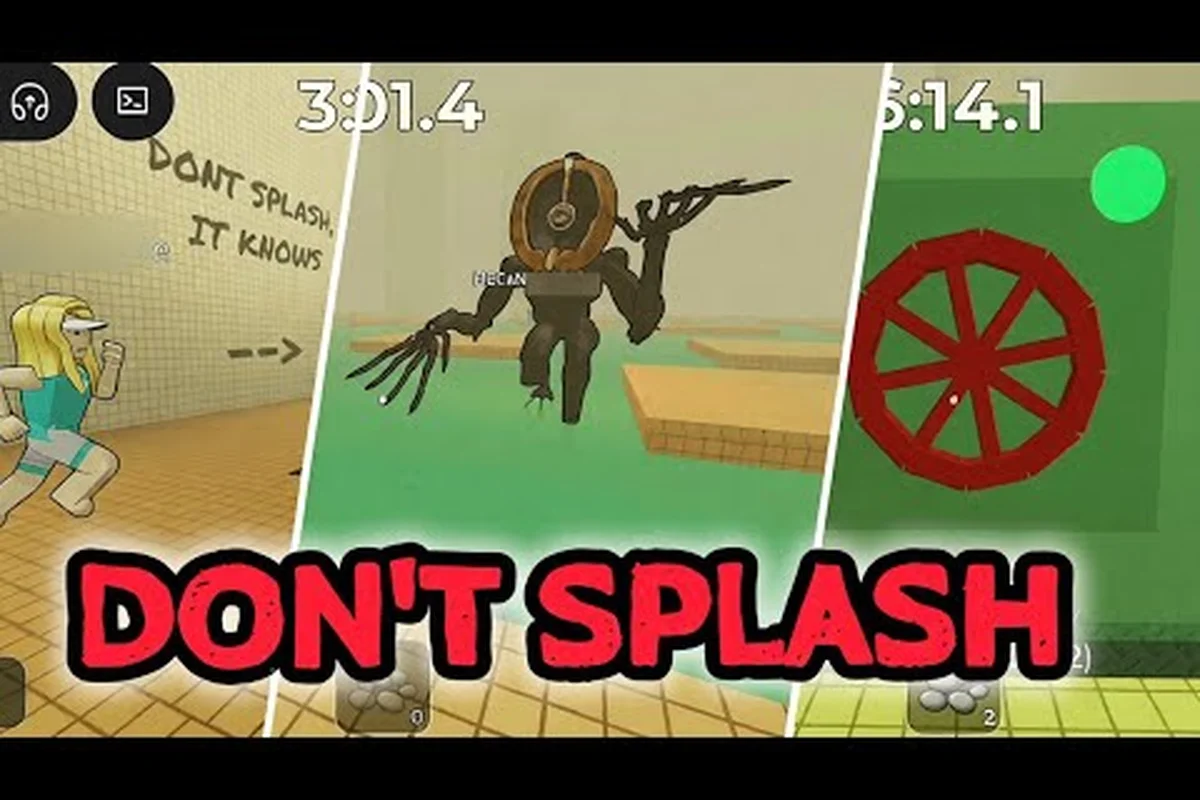
The dont splash patch notes history matters because each October release changed the roster, pace, and seasonal priorities. From the October 17 launch through the V2 stage update, players can track every confirmed change and prepare for the October 31 pack deadline.
DONT SPLASH Patch Notes History: October 17-24 Timeline
The official DONT SPLASH game page on Roblox records a rapid launch cycle that began on October 17, 2026. The original listing was created that day, then renamed several times as the developer added update messaging and the game attracted larger audiences.
Because the project does not maintain a separate traditional changelog, the dont splash patch notes history has to be reconstructed from the official game page, the developer’s public activity, and player reports. Those records show a game that moved from its initial release to chart visibility, a V2 identity, additional stages, and Halloween content in less than a week.
| Date | Recorded event | Practical significance |
|---|---|---|
| October 17 | Game page created | Established the original release and baseline experience |
| October 21 | First Roblox Top Trending and Up-and-Coming chart entry | Expanded visibility and brought more players into the same servers |
| October 22 | Listing changed to “[UPD] DONT SPLASH” | Signaled active development and the arrival of update content |
| Around October 22 | Concurrent-player count passed 25K | Marked an early popularity milestone |
| Around October 23 | Listing changed to “[NEW STAGES] DONT SPLASH” | Shifted attention toward stage expansion |
| October 24 | V2 update went live as concurrency passed 50K | Added stages and Halloween material while retaining the core sound-based chase |
The store-title changes are useful signals, but they are not always complete patch notes. For example, the “[UPD] DONT SPLASH” and “[NEW STAGES] DONT SPLASH” labels confirm that the developer was actively altering the game, yet neither title identifies every balance adjustment affecting the sound-based chase. The update tracker therefore separates dated listing changes from reported stage, difficulty, and Halloween-content additions, and flags community observations as provisional when official confirmation is unavailable.
What the October 22 Rename Communicated
The “[UPD] DONT SPLASH” title appeared when the game was already receiving more attention. The official page’s timeline associates that rename with update content, while the developer profile shows a steady release pattern rather than a single major patch. For readers trying to answer when DONT SPLASH was updated, the title change serves as a dated public marker of that activity.
The rename did not replace the recognizable game name. Instead, it placed a short update label in front of it, giving returning players an immediate signal that the experience had expanded. It was also a practical way to highlight new content without publishing a lengthy public changelog.
Why the October 23 Title Change Matters
The second rename, “[NEW STAGES] DONT SPLASH,” made the V2 feature set clearer. It told players that the most important addition was not merely a cosmetic event; the release was expanding the amount and structure of playable content. The title also coincided with the game crossing roughly 50,000 concurrent players, according to its official listing.
The sequence provides a practical way to separate the V2 announcement from the live patch rollout: the title changed to “[NEW STAGES] DONT SPLASH” before players received the new-stage content, while later community footage documented additional stage sections, Halloween props, and the seasonal pack. This ordering matters for the dont splash patch notes history because it shows that the rename was an early public signal, not proof that every listed feature had already entered the active release. It also explains why “when was DONT SPLASH updated?” may have multiple dates depending on whether a player means the title update, the stage deployment, or the later seasonal-content rollout.
DONT SPLASH Update Tracker: Confirmed October Changes
The strongest confirmed element of the October update is V2 content. The V2 era added stage sections and Halloween-themed props, while the underlying monster remained built around sound. The developer’s Roblox profile supports the idea that updates arrived rapidly during the launch period, although it does not provide a separate itemized changelog.
This means the dont splash update tracker should separate three layers of information: confirmed store-page events, mechanics reported by players after playing, and forward-looking claims that have not yet been verified. Keeping those categories apart prevents a title change or video prediction from being presented as a confirmed balance patch.
| Update area | Confirmed status by October 24 | Player-facing effect |
|---|---|---|
| New stages | Added in the V2 update | Longer runs and more stage sections |
| Halloween props | Added to stage geometry | Seasonal visual changes |
| Halloween Pack | Available through October 31 | Limited purchase window |
| Difficulty modes | Easy, Normal, and Hard remained | No confirmed mode removal or replacement |
| Checkpoint rewards | Continued to function | Progression structure stayed intact |
| Monster behavior | Continued to hunt by sound | Core horror loop remained unchanged |
| Store naming | Two rapid title updates | Clearer signaling of active development |
The practical outcome was expansion rather than a fundamental rewrite. New stages increased run length, Halloween props changed the atmosphere, and the pack supplied limited seasonal cosmetics. Core systems such as difficulty selection and checkpoint rewards remained stable, which made the release easier for returning players to understand.
How Community Reports Fill the Changelog Gaps
Player-created videos supplied the clearest view of the post-release experience. A V2 gameplay walkthrough by Zac Worthy shows the additional stage content and notes longer dry corridors and valve puzzles. Another community video, TonyCool’s reaction to the October changes, reported that the Easy, Normal, and Hard options remained available and that Halloween additions were primarily cosmetic.
These sources are useful because they document play after deployment, not just promotional intent. However, their observations should still be treated as version-specific. A player’s route, difficulty, and stage section can affect how a mechanic feels, and community descriptions may not capture every balance value.
What Was Not Reported as a Major Mechanic Rework
The available October reports do not describe a replacement for the sound-based chase, a new difficulty ladder, or the removal of checkpoint rewards. Instead, the new stages added more dry space and extended valve-based sections. That design can make the game feel different because the player must manage longer routes under the same central threat.
The 2026 gameplay-change record therefore centers on content volume, stage flow, seasonal presentation, and the October 31 pack deadline, rather than a replacement for the sound-based chase, difficulty ladder, or checkpoint rewards. This makes the release more accurately describable as a V2 expansion than a complete systems overhaul: its main effect is to enlarge the stage pool and add longer valve-based routes, giving players more opportunities to manage dry space and timing while the central chase behavior remains intact.
Gameplay Changes 2026: How the V2 Update Affects Runs
The main effect of V2 was to make each run longer and more spatially demanding. Community walkthroughs describe additional dry corridors, more valve puzzles, and a larger amount of stage geometry to traverse. Because the monster still hunts by sound, the change rewards players who can read the environment and use alternate paths rather than relying only on raw movement speed.
Players who learned the original stages may notice that familiar habits no longer cover every situation. More dry corridors can provide relief from the water threat, but they can also create longer exposure periods. Longer valve puzzles ask players to remain near machinery, where sound may become easier for the monster to track.
| Situation | Before V2 | After V2 | Practical adjustment |
|---|---|---|---|
| Stage length | Original routes dominate early experience | More sections and longer full runs | Save checkpoint progress before unfamiliar branches |
| Dry corridors | Useful recovery space where available | Added more prominently in V2 content | Use them strategically, but do not make unnecessary noise |
| Valve puzzles | Existing puzzles support route decisions | Some sections place more emphasis on longer puzzles | Know the task before committing to a noisy location |
| Monster chase | Centered on sound | Still centered on sound | Treat every tool and valve sound as potential information |
| Difficulty choice | Easy, Normal, and Hard | The same three modes remained | Use Easy to learn new routes before pushing difficulty |
The October 2026 gameplay review similarly notes that the new stages lengthened complete runs. That is a meaningful change for players who chase completion, improve route times, or attempt the game on harder settings. A longer stage list increases replay value, but it also makes navigation knowledge more valuable.
A Practical Route Strategy for the New Stages
The first adjustment is to treat each new stage section as a separate information problem. Identify the exit, the nearest valve, and the safest dry area before beginning a task. This prevents a player from discovering the next route only after making unnecessary noise. The new-stage and October update overview offers a useful companion for reviewing the release’s added content.
The second adjustment is to preserve checkpoint discipline. Since the update did not remove checkpoint rewards, players should still use the checkpoints that appear during a run. The difference is that V2 may reward patience more strongly, because a failed attempt now repeats a longer portion of the stage.
The third adjustment is to separate cosmetics from route decisions. Halloween props may alter the visual mood of a corridor, but players should still rely on recognizable landmarks and the geometry of playable surfaces. Confirmed reports describe the props as cosmetic additions rather than new interactive objects.
DONT SPLASH Update Effect on Meta: What Actually Shifted
The update effect on meta was moderate rather than fundamental. A more competitive field of players can benefit from familiarity with the V2 routes, but the update did not replace the central mechanic or remove the available difficulty choices. The result is a content-driven meta in which stage knowledge and efficient movement matter more than learning a completely new chase system.
The official listing shows concurrent users passing both 25K and 50K milestones during this period. A larger audience changes matchmaking and social visibility, yet it also produces more varied skill levels. Newcomers may encounter players who already know the expanded routes, while experienced competitors can reduce run times through better valve choices and quieter approaches.
| Meta factor | Before the October release | After the V2 update | Relative impact |
|---|---|---|---|
| Knowledge advantage | Stage-specific learning | Stage-specific learning plus more route variants | Moderate |
| Movement value | Important | Important, with more room for route decisions | Moderate |
| Sound management | Core to every chase | Core and still emphasized by longer sections | High |
| Cosmetic impact | Seasonal items may appear | Halloween props and pack cosmetics added | Low to moderate |
| Run length | Baseline stage length | Longer complete runs | Moderate |
| Competitive reset | Limited | Not a full reset because core systems stayed intact | Low |
This is why the update effect on meta should not be confused with a balance overhaul. The October release expanded the game’s stage pool and seasonal identity, but the available evidence shows that difficulty tiers, checkpoint rewards, and the sound-based chase remained in place. Competitors therefore gain an edge by learning new routes, not by switching to an entirely new build or objective.
Why the Halloween Pack Creates a Purchase Deadline
The dont splash halloween pack ends October 31, 2026, according to the community review and reported store messaging. That deadline gives the seasonal release a clear endpoint, although players should verify the exact purchase cutoff inside the game before making a decision. Store pages and in-game timers can differ because of regional settings, account display, or how the expiration is implemented.
Cosmetic-only status should not be confused with zero value. Halloween props can change how stages look and feel, while pack cosmetics provide a limited-time reason to revisit familiar areas. However, neither addition appears to alter monster behavior, difficulty tiers, or checkpoint progression.
Players evaluating a purchase can use the Halloween Pack cosmetics overview to compare what the seasonal items add. The more important decision is whether the appearance and collection value justify buying before the pack expires.
| Purchase consideration | What the October evidence supports | What to verify before checkout |
|---|---|---|
| Availability | Halloween Pack is available during the October event | Exact expiration time in the account’s store |
| Content | Seasonal cosmetic bundle | Individual item list and regional price |
| Gameplay impact | No confirmed mechanical advantage | Whether any listed item has a functional description |
| Deadline | October 31, 2026 | Whether the item remains usable after expiration |
| Value | Best for players who enjoy seasonal collections | Whether the pack is permanently obtainable later |
When Was DONT SPLASH Updated in October 2026?
The short answer is that DONT SPLASH was updated repeatedly during its first week. The game page was created on October 17, the October 22 title promoted an update, the listing changed again around October 23 to advertise new stages, and the V2 release was active by October 24. The official Roblox game page is the best primary record for these public changes.
The month therefore contains a launch and a concentrated development cycle rather than one isolated patch. A player trying to answer when DONT SPLASH was updated should also consider the fact that the developer may have made live adjustments without changing the store title, so the visible timeline captures major releases rather than every server-side experiment.
A Day-by-Day Reader’s Record
October 17 is the baseline because the original game listing was created. October 21 marks the visibility milestone when the game entered Roblox’s Top Trending and Up-and-Coming charts. October 22 brings the update-focused rename and the 25K concurrency milestone. Around October 23, the title changes again to emphasize new stages. October 24 completes the sequence with the V2 release and the 50K concurrency milestone.
| Question | Best supported answer | Confidence |
|---|---|---|
| When did the game first appear? | October 17, 2026 | High, based on the official listing |
| When did the first chart milestone occur? | October 21 | High, based on public chart reporting |
| When was the update rename shown? | October 22 | High, based on listing history |
| When was the new-stages rename shown? | Around October 23 | High, with approximate timing |
| When did the V2 content become active? | By October 24 | High, supported by official and player records |
| When does the Halloween Pack expire? | October 31, 2026 | High for the date; verify the exact time in-store |
This timeline also shows why a page title can be a useful update tracker. Between October 22 and October 24, the listing changed from an update announcement to a new-stages announcement, then the observed game version supplied the new content.
What Future Patch Notes May Look Like
The developer’s rapid pace suggests that future releases may continue to emphasize additional stages or seasonal events. That expectation comes from the direction of the October work, not a confirmed roadmap. Players should treat predictions as speculation unless the official game page or developer profile provides a matching announcement.
The recent update and future-change overview can help separate confirmed additions from community expectation. The safest approach is to record the date, visible store title, stage changes, and any mechanical reports for each release, while marking uncertain information explicitly.
Practical Update Tracker Checklist
A useful patch history should help readers distinguish what changed, when it changed, and what remains uncertain. For DONT SPLASH, the most reliable tracker records the official title, player count milestones, stage additions, seasonal items, and the status of the core sound chase. It should also preserve exact dates because several listing changes occurred within a very short window.
Start with the official page, compare the current title with earlier snapshots, and then check the developer profile for release activity. After that, use player videos to confirm how the live build feels. This process catches changes that may not appear in a formal changelog, such as added corridors, altered stage geometry, or unexpected difficulty behavior.
Recording Each Future Release
Use a consistent format so entries remain easy to compare. Record the date first, followed by the visible game-page name and whether the change involved content, mechanics, cosmetics, or a bug fix. Separate confirmed facts from player reports so that a later correction does not erase the original evidence.
| Field to record | Example from October | Why it matters |
|---|---|---|
| Date | October 24, 2026 | Establishes the release window |
| Visible title | “[NEW STAGES] DONT SPLASH” | Identifies the advertised headline |
| New content | V2 stage sections | Shows the main content expansion |
| Seasonal feature | Halloween props and pack | Tracks limited-time content |
| Core mechanic | Monster still hunts by sound | Reveals whether the horror loop changed |
| Player feedback | Longer runs and valve puzzles | Captures practical effects |
| Confidence | Confirmed or community-reported | Prevents uncertainty from becoming fact |
The Halloween Pack expiration should receive its own note because it is time-sensitive. Record October 31 as the reported end date, but keep the exact checkout deadline separate if the in-game store shows one. The difficulty and seasonal-change analysis adds useful context for determining whether an event involved a meaningful systems change or only visual content.
Frequently Asked Questions
What was the latest DONT SPLASH update in October 2026?
The latest confirmed major update by October 24 was V2, which added new stage sections, Halloween props, and seasonal pack content. The official listing changed to “[NEW STAGES] DONT SPLASH” around October 23. The update expanded runs without replacing the sound-based monster chase, while Easy, Normal, and Hard difficulty remained available.
When was DONT SPLASH updated during October 17-24?
DONT SPLASH was updated throughout its opening week rather than on one date alone. The official page was created October 17, an update-focused rename appeared October 22, and a new-stages rename followed around October 23. The V2 content was live by October 24, making the launch period a sequence of closely spaced release milestones.
Does the October 31 Halloween Pack deadline include every timezone?
The reported Halloween Pack end date is October 31, 2026, but the precise cutoff may depend on the store’s regional clock. Players should open the in-game store before purchasing and confirm the displayed expiration time. Waiting until the final hours can also create checkout or account issues, so earlier verification is the safer approach.
Did the V2 update change the core gameplay meta?
The update expanded stage routes and run length, but the available evidence does not show a complete meta reset. The monster continued to hunt by sound, difficulty choices remained, and checkpoint rewards stayed in place. Competitive advantage now comes more from learning the new routes and managing noise across longer stages.
Are the October Halloween props purely cosmetic?
Available player reports describe the Halloween props as visual additions to stage geometry, with no confirmed change to the monster, difficulty settings, or checkpoint system. The October gameplay walkthrough shows the seasonal presentation in the V2 build. Players should still check individual Pack descriptions for any item-specific effects before buying.