
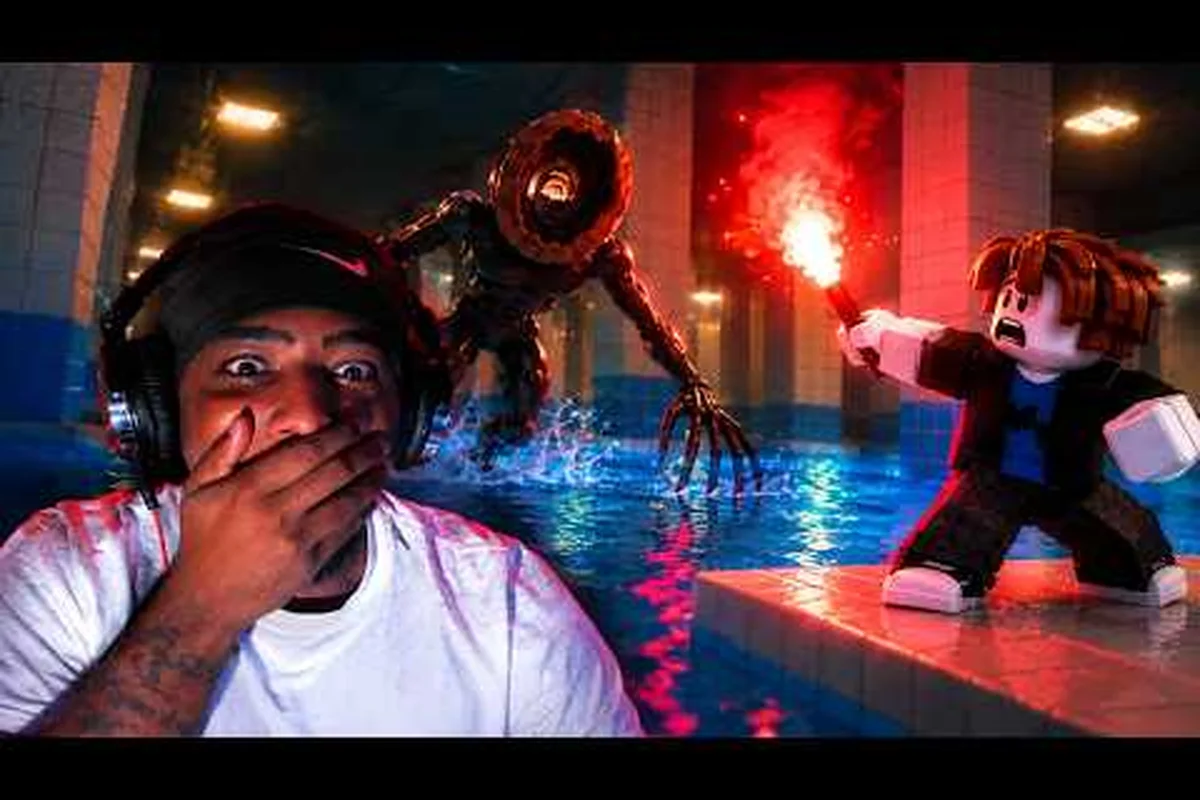
A useful dont splash squad guide makes rescues safer because one fall can draw the creature toward friends. Designate a rescuer and a lookout, keep the remaining squad spread out, and silence accidental noise from players so the team does not herd the creature into a crowded corridor. After a downed teammate is revived, regroup only when the route is clear, then move away from the area to avoid triggering another chase.
Dont Splash Squad Guide Fundamentals
Squad play in DONT SPLASH depends on controlled movement. A single player who slips into water can create a loud splash, pull the creature toward a cluster of teammates, and turn an ordinary rescue into a pursuit. The safest teams therefore treat every noise as shared information: one person moves, another watches the danger zone, and a designated distractor creates a decoy only when the route is clear.
The official DONT SPLASH game page on Roblox lists servers for up to 10 players. That size creates a practical problem: a successful escape by one stranger can still change the route available to everyone else. According to community reports, one player falling into the water may draw the creature toward nearby teammates, while a pebble thrown in the opposite direction can redirect its attention.
The Core Squad Roles
A reliable team assigns roles before attempting a difficult crossing, because a failed jump, fall, or pebble throw can draw the creature toward a stranded teammate. Even two friends can use the same structure: one carries the pebble supply and manages a single distractor action, while the other watches the creature and calls warnings. This prevents the squad from making several noise-producing actions at once, giving the path leader time to choose the next safe route without triggering an accidental splash.
| Squad role | Main responsibility | Best action during danger |
|---|---|---|
| Path leader | Selects the next safe route | Points, waits, and moves only after clearance |
| Rear guard | Watches the creature and rear approaches | Calls warnings and prevents accidental splashes |
| Distractor | Creates a controlled noise away from the squad | Throws a pebble only when the creature is facing the group |
| Rescuer | Helps downed or stranded teammates | Uses the safest available revive method without creating another splash |
| Route spacer | Keeps players from bunching together | Maintains distance between groups crossing open areas |
The most important rule is simple: one sound event should correspond to one deliberate action. If several people jump, fall, or throw objects at once, the squad loses the ability to determine which noise attracted the creature. That confusion is the basis of dont splash accidental noise from players, since even a helpful teammate can become a source of danger when everyone reacts at the same instant.
What Makes This Strategy Work?
The approach works because it gives the creature one clear target for attention while keeping the rest of the squad away from the water. A pebble distraction does not guarantee a safe crossing, but it creates a short window in which the team can move through a dangerous area. The important variables are distraction timing, distance from the landing point, and the creature’s current facing direction.
A crowd creates the opposite effect. When many players squeeze onto one platform, fall into the same pool, or rush toward the same door, the squad produces several overlapping signals. The creature may investigate the loudest or newest event, but players cannot predict which one caused its change in movement. This is the central dont splash crowd risk: more teammates do not automatically mean more safety.
For example, a two-person squad can stage a pebble distraction from the far side of a landing platform, then have the second player cross while the creature is facing away; the second player should stop before entering its detection range and wait for the creature to turn before moving again. This sequence reduces accidental noise, avoids the dont splash crowd risk, and makes dont splash teammate rescue safer by preserving a clear distraction window instead of creating overlapping movement signals. The DONT SPLASH beginner guide is a useful foundation for individual movement and first-time survival priorities before applying these coordinated tactics.
Dont Splash Teammate Rescue Procedures
Rescuing friends in DONT SPLASH is not a free action because every rescue attempt can create movement, sound, and a new position beside the water. The squad must first determine whether a teammate can still be reached, whether the creature is approaching, and whether the rescue route permits a safe retreat afterward. Speed matters, but speed without positioning can simply move the problem closer to everyone.
Community walkthroughs describe a coordinated pattern in which one player acts as the distractor while the others cross a dangerous gap. A verified DONT SPLASH walkthrough by Zac Worthy demonstrates that mechanic in context. The practical lesson is not to throw randomly; it is to coordinate the throw with the rescue so the creature has a reason to investigate a location away from the stranded player.
Before Approaching a Downed Teammate
First, stop the group. Running players create additional noise and may conceal the direction from which the creature is approaching. The rear guard should watch the creature, while the path leader checks that the rescue lane does not end at a ledge, pool, or narrow passage where the revived player would immediately fall.
| Check | Safe sign | Warning sign |
|---|---|---|
| Creature distance | It is moving away or focused elsewhere | It is facing the teammate or approaching quickly |
| Rescue route | Has a clear landing area | Ends over water or at a crowded choke point |
| Team spacing | Players are spread along the route | Everyone is stacked in one place |
| Sound situation | No active splashing or jumping | Several players are moving irregularly |
| Decoy position | Can be thrown away from the group | Would land closer to the teammate |
This checklist turns dont splash teammate rescue into a controlled operation. It also reduces the chance that a second player will fall while trying to help. A squad that rescues one teammate successfully has a better chance of completing the run; a squad that panics at the first downed player can lose its entire formation.
Reviving Without Creating a Second Incident
The safest rescue starts with communication. A downed teammate should state their location, identify the safest nearby landing zone, and avoid moving toward the rest of the squad if doing so would cause a splash. The rescuer then waits for the rear guard to report a clear route, advances, completes the revive, and moves the teammate away from the edge before another player crosses.
Rescue spacing should be measured in movement rather than seconds. A rescuer should not remain in the same place for a long countdown, because a stationary teammate can become exposed when the creature changes direction. Likewise, the revived player should not immediately join a crowd at the destination. One teammate moving out of the danger zone before the next teammate enters is safer than five players trying to occupy the same safe spot.
What If the Creature Moves During the Revive?
Treat the rescue as interrupted as soon as the creature turns toward the group. The rescuer should hold position if possible, cancel the approach if the game allows it, and wait for the distractor to create a new target. If the teammate is still reachable, the team can repeat the same pattern. If the creature is already too close, the priority becomes creating distance rather than forcing a risky completion.
The objective of dont splash reviving friends is not simply to trigger a revive as quickly as possible. It is to bring the player back without giving the creature a cluster to chase. Players should remember that a successful rescue followed by an immediate squad wipe produces no lasting benefit.
Dont Splash Accidental Noise Control
Accidental noise is one of the most common reasons a careful plan fails in a public server. A jump that ends in a pool, an item dropped at the wrong moment, or several players reacting to the same scare can pull danger toward the group. Good squad control begins by identifying which players can create noise and assigning them clear responsibilities.
The DONT SPLASH tips video by TonyCool emphasizes crowd risk and recommends spreading out in public matches. That advice matters because a stranger’s mistake can change the creature’s path without warning. Your squad cannot control every player in the server, but it can reduce the number of noisy events under its own control.
Noise Classification System
Classifying sounds helps the squad react consistently instead of treating every noise as a creature approach. A pebble landing nearby is usually a deliberate distraction and can support a controlled advance, while a teammate’s jump gives the group a brief movement cue that should be respected before the next step. By contrast, an unplanned fall into water signals immediate danger, so nearby players should freeze, identify the source, and redirect before attempting any teammate rescue.
| Noise source | Likely meaning | Squad response |
|---|---|---|
| Pebble landing | Planned distraction | Move while attention is diverted |
| Teammate jump | Controlled movement | Hold the next route until landing is clear |
| Unplanned fall | Immediate danger signal | Stop nearby movement and check the creature |
| Multiple splashes | Uncontrolled disturbance | Scatter along the planned escape route |
| Object or player landing near the group | Uncertain target | Distract away before advancing |
The system makes it easier to recognize dont splash accidental noise from players before a splash becomes visible. If the rear guard hears a sharp landing behind the group, the path leader should not continue blindly. They should pause, identify the direction, and either throw a decoy or select a different route.
Personal Noise Discipline
Each player controls three variables: jump timing, landing target, and reaction speed. Wait for a clear landing area before jumping, avoid landing beside water when an equal-cost path exists, and do not jump simply because another teammate did. These habits seem small, but they compound across a ten-player server.
Players also need a stop phrase that the whole group recognizes. A sudden “stop” can be misunderstood as a jump cue or a warning about the creature, so the phrase should be short and specific, such as “water ahead” or “hold movement.” The group should agree on these calls before dangerous sections rather than during a crisis.
| Problem | Better squad response | Result |
|---|---|---|
| A player panics and jumps | Announce landings before moving | Fewer uncontrolled water entries |
| Everyone follows one teammate | Spread into staggered groups | Clearer creature tracking |
| Pebble lands near the squad | Use another angle or wait | Distraction no longer threatens the group |
| Strangers crowd a door | Take a secondary route | Lower collision and noise risk |
| Teammate falls behind | Hold position and distract | Less temptation to run through danger |
Managing Strangers Without Escalation
You cannot ask an entire server to follow a formation, and aggressive gestures may produce more noise than the original incident. The practical response is to maintain distance. When your squad approaches a crowded section, choose the wider path if available and avoid pushing through the group. Your objective is to pass the area without encouraging anyone to jump, fall, or collide.
This is also where dont splash avoid herding becomes a practical skill rather than a slogan. Keep your group from becoming a dense mass, but do not spread so widely that a rescue becomes impossible. Two compact teams of three or four can often move more safely than ten individuals trying to occupy one narrow route.
Dont Splash Avoid Herding Strategies
Herding occurs when a squad’s own movement funnels players toward the creature or into a hazardous area. It can happen even when every player intends to help. A group moving toward a teammate may surround that teammate’s position, while a crowd rushing away from a splash may compress into a corridor that offers no escape.
The verified DONT SPLASH walkthrough by Zac Worthy shows coordinated teams assigning a distractor while the rest of the group crosses. This creates a controlled direction of danger. The same principle can prevent herding: move people in small groups, keep the group’s path visible, and never use a single narrow escape unless the creature cannot reach that area.
Zone-Based Group Movement
Divide the map into a moving front, a middle group, and a rear group. The front watches the next landing, the middle handles active rescues, and the rear monitors the creature. This arrangement makes it less likely that one warning is missed.
| Formation | Spacing objective | Best use |
|---|---|---|
| Single file | One player per narrow section | Tight corridors and one-person crossings |
| Staggered pairs | Pair spacing with a visible rear pair | Medium routes and standard squad travel |
| Split route | Two groups on different paths | Crowded map areas or urgent escapes |
| Distraction line | Distractor separated from the main group | Dangerous gaps and planned crossings |
| Rescue cluster | Only rescuer and support near a teammate | Short, clearly controlled revives |
The front-to-rear information chain matters more than a perfect formation. The front should never move until the rear reports that the path behind is clear. This prevents the classic error in which everyone advances, the back player falls, and the entire group turns toward the same splash.
When Herding Is Already Happening
If players bunch together near a hazard, do not ask the whole crowd to reverse at once. The rear guard can throw a pebble in the opposite direction, the front pair can continue along the safest open route, and the middle group can create space between those two groups. The result is a controlled split rather than a mass collision.
If the creature is already chasing the dense group, decoys become more urgent, but their placement becomes more precise. A pebble that lands near the group is not a distraction. The target area needs enough distance that the creature must turn away and cross open ground while the squad uses a separate path. The mechanics of its pursuit are covered in more detail in the water-sensitive monster guide.
Avoid Herding During Public-Merver Events
Crowded events produce predictable pressure points. Many players approach a dangerous feature, hesitate when someone falls, then surge toward the same exit. Your squad should expect a pause and treat it as a dangerous period rather than a convenient moment to pass. During the pause, keep the rear guard still and use one decoy only if the route ahead remains clear.
Community reports also note that the game’s one-rule premise created a viral culture around visible failures. According to the DONT SPLASH run review by Ricoko, the Halloween season helped drive that attention. Larger crowds and more observers can increase both opportunity and risk, so your squad’s discipline matters even when other players are treating the moment as entertainment.
Advanced Dont Splash Squad Comms and Rescue Systems
A strong squad does more than react to danger; it predicts where danger will form. The advanced part of this dont splash squad guide is to combine route planning, controlled distractions, and rescue priorities so each action supports the others. This becomes especially useful when the server contains strangers, limited safe space, and multiple players who may panic at once.
If you are organizing a private run with friends, the DONT SPLASH guide for playing with friends can help establish communication and difficulty expectations before the squad begins. For example, assign one player to watch for approaching threats while another identifies rescue targets, then agree on a signal for distraction, regrouping, and emergency retreat. This reduces accidental noise, prevents the squad from herding into a crowd, and makes reviving friends safer when safe space is limited.
A Three-Call Communication System
Three calls are enough to keep the squad coordinated without filling the chat with constant instructions. Use a call for danger direction, route status, and rescue need. Keep each call short and specific: “Water left” identifies a hazard or creature, “Clear ahead” confirms that the next landing and route are safe, and “Help, center” pinpoints where a teammate needs rescue. For example, if a player is stranded while a creature approaches from the right, “Help, center” lets the rear guard draw attention away from the rescue side, reducing accidental noise and preventing the squad from crowding the same area.
| Call | Meaning | Example response |
|---|---|---|
| “Water left” | A hazard or creature is on the left | Move right or pause |
| “Clear ahead” | The next landing and route are safe | Front player advances |
| “Help, center” | A teammate needs rescue at a stated side | Rear guard distracts away from that side |
| “Stop” | Everyone freezes immediately | No one jumps, throws, or advances |
| “Decoy” | A pebble is about to create a distraction | Group waits for the creature to turn |
A call only works if its meaning stays constant. If “clear” sometimes means the route is safe and other times means the creature is far away, the squad will eventually act on the wrong assumption. Keep the vocabulary small, rehearse it before the run, and assign one person to repeat critical calls if players join at different times.
Rescue Triage Rules
Not every downed teammate can be rescued safely, so the team needs priorities. First, identify immediate water-entry danger. Second, determine whether the creature is approaching. Third, check whether a decoy can buy enough time. Only then should the rescuer commit.
| Situation | Preferred response | Reason |
|---|---|---|
| Teammate can still move | Tell them the safe direction | Avoids unnecessary revive movement |
| Creature is distant | Rescuer approaches after a decoy | Limits exposure time |
| Creature is turning back | Distractor changes direction | Rescued player is less likely to be intercepted |
| Rescue route crosses water | Wait or find a wider route | A rushed revive may create a second fall |
| Multiple players are down | Triage noise and position first | Simultaneous rescues create conflicting calls |
A useful rule is one rescuer per incident. Two helpers can feel safer, but they also double the number of avatars near the edge and may block the teammate’s safest escape. Send one rescuer, keep the second behind the path leader, and let the rear guard handle the creature. More people should not automatically become more helpful.
Pebble Budget and Decision Windows
A pebble is valuable because it interrupts the creature’s attention, not because it guarantees a particular path. A team can still fail if the decoy lands poorly, if the creature changes direction midway, or if the group hesitates after the throw. Before using one, decide who moves, where that player lands, and what happens if the distraction fails.
Preplanned distraction points are better than improvised throws during panic. Identify two areas outside the main route where pebbles can land safely. The distractor should aim for the point that pulls the creature farther from the group, not merely the nearest visible water. If only one player is using pebbles, protect that player’s position because losing the sole distractor changes the entire rescue plan.
| Pebble condition | Expected benefit | Risk |
|---|---|---|
| Creature faces the squad | Strong chance of turning toward it | Minimal if the landing area is clear |
| Creature already moving away | Little useful distraction | Wasted resource |
| Pebble lands close to squad | None or increased risk | May pull danger back |
| Throw covers a planned crossing | Creates a movement window | Requires precise timing |
| No safe landing area | No reliable result | Could add another noise event |
Coordinating With Strangers
A private squad can communicate freely, but strangers may not know your formation. Treat them as environmental hazards rather than enemies, and never assume they will follow your route. Give them space, avoid sudden turns near their position, and never throw a pebble in their direction. Their mistakes can affect your timing, but interference usually makes the entire server more dangerous.
If strangers join your path, designate a border scout rather than a recruiter. The scout watches the edges of the group and alerts you when an outsider approaches. This reduces the chance that your central route will suddenly compress. It also allows the main team to focus on friends and rescues rather than trying to manage every nearby player.
Frequently Asked Questions
How do you rescue a teammate in DONT SPLASH without attracting the creature?
Stop movement, identify where the teammate fell, and have the rear guard watch the creature. Throw a pebble away from the rescue route when the timing is safe, then send one rescuer instead of the entire group. Keep a clear landing area ready because the revived player may need to move immediately.
Should a squad stay close together or spread out in a public server?
A squad should use controlled spacing rather than extreme separation. Small staggered groups can move through crowds without becoming a dense target, while the rear guard still monitors danger. Players responsible for dont splash avoid herding should avoid the widest possible formation if it makes communication and rescues impossible.
What is the best way to stop accidental splashes near teammates?
Assign jump timing before each crossing, choose visible landing zones, and use a stop phrase that means no one should move. The rear guard should call hazards before they become inevitable. A player who notices an unstable or water-adjacent route should announce it rather than relying on a last-second reaction.
Can pebbles safely rescue friends during a crowded encounter?
Pebbles can support a rescue when they land far enough away to draw the creature in the opposite direction. They are not reliable if thrown close to the squad or while the creature is already leaving. Plan the crossing before throwing, keep the rescuer behind cover when possible, and avoid wasting several distractions without changing the creature’s direction.
What should a squad do after reviving a teammate?
Move the revived player away from the edge before anyone else approaches. Confirm that the creature is no longer facing the group, then regroup in a staggered formation. Avoid rushing back to the downed position immediately, since the same noise or open route that caused the first incident may still threaten the team.