
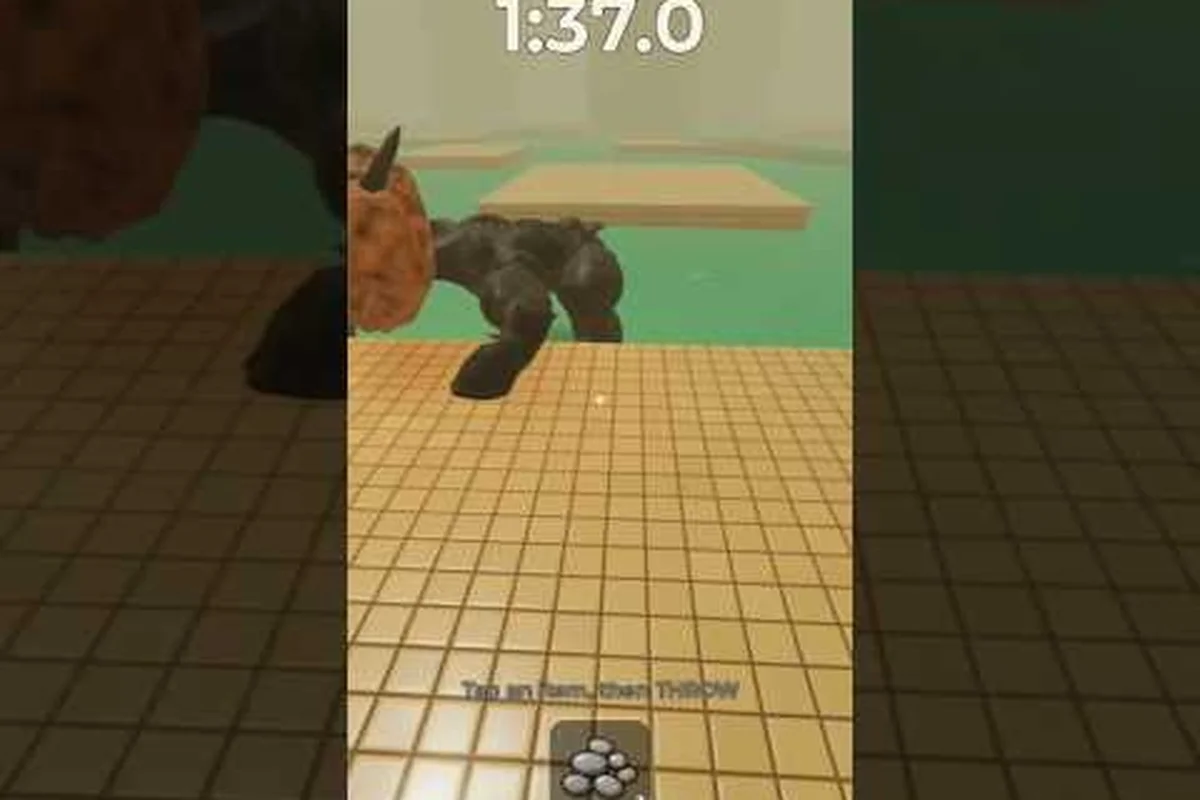
DONT SPLASH monster update changes matter because the entity responds to sound rather than sight, making noise discipline central to every stealth route. Changes to detection range, patrol behavior, movement speed, and jumpscare timing can alter when the DONT SPLASH entity investigates a noise, how quickly it closes distance, and how long you have to escape. For example, moving while a patrol is nearby may expose a louder sound profile, while remaining still after dropping an object can delay detection but leave less room before the monster reaches your position. Understanding the DONT SPLASH jumpscare and “it knows” cues also helps players distinguish ordinary pursuit from an active search, so the updated mechanics affect both survival and route planning.
Dont Splash Monster Update Changes: What Actually Changed
The dont splash monster update changes center on IT, the blind entity that hunts through sound. According to the official DONT SPLASH game page, IT navigates by detecting splashes rather than seeing avatars, so every water landing, jump, and thrown object can redirect the chase.
That distinction is the essential survival rule: Water contact creates a noise event, while dry movement can remain unnoticed. IT does not track avatars through sight, so a quiet shoreline crossing may be safer than a direct sprint through a flooded corridor. For example, if a player enters the water to retrieve a thrown object, the resulting splash can immediately pull IT toward that location even when the player has already moved away. The table below separates the core behavior of the dont splash entity from common misconceptions.
| Monster behavior | Confirmed behavior | Player implication |
|---|---|---|
| Detection | IT is blind and reacts to splashes | Do not rely on breaking line of sight |
| Movement | IT patrols underwater and can intercept airborne players who touch water | Treat a jump into water as an immediate alert |
| Response | A detected splash sends IT toward the splash zone | Move away from the sound after contact |
| Lure | A thrown pebble can draw IT toward distant water | Use the pebble before crossing risky water |
| Capture | IT can reach the player and trigger a jumpscare | Survive the chase rather than trying to fight |
| Recovery | IT eventually drifts back toward patrol behavior | Wait for a safe opening instead of rushing |
These mechanics also explain the design behind the dont splash it knows slogan. The horror comes from predictability: players can hear the warning, understand the trigger, and still make a split-second mistake. Community walkthroughs consistently show that sound is the dependable information channel, while visual distance is not.
Detection Range and Visibility
IT does not need to see a player, which makes conventional hiding tactics unreliable. Crouching behind scenery may help with positioning, but it does not undo a splash already made. Detection begins with noise, and the monster’s path leads toward the location where that sound occurred.
Players who want more detail on the entity’s field of awareness can review the guide to IT’s line-of-sight behavior. The practical rule remains simple: avoid all water-triggered noise unless you intend to use it as a decoy.
How Dont Splash Entity Detection Actually Works
The dont splash entity follows a sound-driven loop: patrol, register a splash, investigate the splash zone, and chase if the player remains exposed. This loop explains why running straight after a bad landing often fails. The sound is already created, so the only useful response is to change your position before IT arrives.
Splash-Triggered Detection
A fall, jump, or object entering water can alert IT. The official page specifically identifies falling water, clipping water during a jump, and thrown objects as relevant sound sources. The impact point matters because IT is drawn toward the splash zone, not necessarily toward the player’s exact location.
This creates a useful tactical distinction: IT reacts to a distinct splash event rather than simply knowing the player is nearby, so each water contact can redirect its pursuit. A pebble may pull IT away from the route, but a player entering the same water can expose that decoy; by contrast, a dry object produces no splash alert and leaves its current behavior unchanged.
| Noise source | Likely result | Best response |
|---|---|---|
| Player enters water | IT investigates the landing area | Exit quickly and move in the opposite direction |
| Player clips water mid-jump | IT may intercept the player in midair | Avoid jump arcs that pass through water |
| Pebble enters distant water | IT is lured toward the pebble | Cross while the entity moves away |
| Dry object lands | No splash event | Continue cautiously |
| Continuous water movement | Repeated alerts can occur | Minimize time in the water |
Interception risk is especially important. A jump that seems safe because the player is above the surface can fail if a body part touches the water during the descent. Video evidence from the DONT SPLASH walkthrough by Zac Worthy demonstrates this pattern, with IT moving toward a water contact and threatening players during a jump.
The Difference Between Hiding and Misleading
Hiding reduces your exposure, but it does not erase a noise event. A player who stands still after landing in water may give IT more time to arrive. Misleading is different: it intentionally creates a sound somewhere else, causing the entity to investigate the wrong place.
The pebble is the clearest example. Player reports and no-commentary footage show it being thrown into distant water, pulling IT away from the intended route. The same method can be repeated if IT turns back, although the timing becomes more dangerous as the monster’s speed and proximity increase.
Dont Splash Monster Speed and Chase Behavior
The dont splash monster cannot be killed, outrun indefinitely, or stopped with a weapon. The practical objective is to interrupt the pursuit and create distance. Players who understand how chase commitment and return to patrol work can avoid turning one splash into a guaranteed encounter.
How to Read the Creature's Charge
IT’s movement changes the danger of a noisy mistake. A distant splash gives the player time to move; a close splash gives the entity little warning. Because IT operates without a vision requirement, the monster can begin a charge even when the player believes the avatar is hidden.
| Situation | Monster pressure | Player objective |
|---|---|---|
| Splash far from the player | Moderate | Draw IT away before moving |
| Splash close to the player | High | Break away immediately |
| IT already moving toward the player | Very high | Avoid another water contact |
| Pebble lure lands successfully | Redirected | Use the opening to cross |
| IT returns to patrol | Lower | Resume cautiously, not recklessly |
Sound becomes a warning system when headphones are used. Players report hearing movement and directional cues before the entity commits to a charge. A tips video by TonyCool highlights the same sound-based pattern. The audio does not reveal a complete map, but it helps estimate distance and avoid moving during a dangerous approach.
Why Distance Beats Speed
A fast player can still lose a run by jumping into water because the mistake creates a new destination for IT. Path control matters more than sprinting, especially around flooded areas. Staying on dry ground gives the player options; entering water removes many of them.
When IT reaches the player, the run ends with one of the dont splash jumpscares seen in the UnoTwo gameplay recording. Since combat is not an option, the best defensive sequence is to avoid contact, create a false target, move away from the sound, and wait for the entity to resume patrolling.
Dont Splash Stealth in Dont Splash: A Practical Route Plan
Dont splash stealth in dont splash is less about invisibility and more about preserving control. A good route minimizes unavoidable water contact, identifies reliable dry detours, and uses pebble lures before the monster is already close. This is especially useful for players who want more context on recent stage and water-level changes.
Route Planning Before the Run
Start by looking for dry paths and recognizing every required water crossing. Players often treat a map as a series of destinations, but IT turns each splash into a shared location: the monster and the player are drawn toward the same noise event.
Because the monster and player are drawn toward the same noise event, route planning should treat each water crossing as a shared risk point rather than a simple objective marker. For example, if a pool separates the player from a required pebble target, check whether the monster’s patrol could reach the far bank first; entering the water there may announce the player’s position to IT. This makes the dont splash monster update changes relevant to navigation: quieter traversal can reduce the chance that a crossing becomes the exact noise event that attracts the entity.
-
Identify the shortest dry detour around each pool.
-
Mark the water entry and exit points before committing.
-
Choose a pebble target on the opposite side of the next path.
-
Avoid jump arcs that clip the surface.
-
Keep a second route in case IT investigates the intended crossing.
-
Pause on dry ground when the audio suggests IT is nearby.
Dry-land discipline is the most transferable tactic in the dont splash stealth loop. A quiet platform landing produces a much weaker alert than a water landing, so stable footing should replace dramatic movement whenever the route allows it. For example, if a pebble target sits across a narrow pool, take the dry edge and line up the throw from land rather than entering the water; after the dont splash monster update changes, preserving that quiet route can keep IT from tracking the player’s position through a shared splash noise event.
Using Pebble Lures Effectively
A pebble is most valuable before a crossing, not after a chase begins. Throwing it into distant water creates a splash away from the player’s route and sends IT toward that area. The player then has a short window to move while the entity investigates.
| Lure timing | Result | Risk |
|---|---|---|
| Before approaching water | IT moves toward the distant splash | Low if the route remains open |
| While IT patrols elsewhere | Creates a safe crossing window | Low to moderate |
| After the player enters water | Competes with the real splash event | High |
| During a close chase | May briefly redirect IT | High, because the entity is already near |
| With no clear escape route | Buys little useful time | Very high |
Two-stage distraction can work when one area offers several pools, but players should not overuse it. If a pebble and the player create splashes at the same time, IT may choose the louder or closer event, leaving the player exposed. The footage in Peta Perjalanan’s stage run shows how quiet movement and deliberate lures work together.
Situational Monster Survival Guide
The dont splash monster update changes are easiest to understand through specific encounters. A wide puddle, a narrow corridor, a pebble distraction, and an accidental midair clip each create a different risk profile. The right response depends on whether the player can change the sound event, redirect IT, or simply create distance.
Wide Water Areas
Wide pools can work as pebble-lure locations, but crossing in one straight line is risky because IT may close the distance and cut off the retreat. Aim for a landing zone with several exits, such as a shallow edge that leads toward dry ground, a wall, or a path around the pool. A single landing point is easier to trap, especially if IT changes direction after the pebble makes noise.
-
Throw the pebble before reaching the pool.
-
Move perpendicular to the original route.
-
Avoid the pebble’s landing point after it makes noise.
-
Keep moving on dry ground after the crossing.
-
Listen for IT changing direction before committing again.
Narrow Water Channels
Narrow channels are hard to lure because the player has fewer escape routes. Splash timing matters more than distance here, and a wide detour may be safer than the shortest crossing. If the channel can be crossed without touching water, use that route consistently.
Close Calls
After a mistake, players often make a second one by trying to sprint directly away. That action can cause a jump that clips the water, producing another splash where IT is already approaching. The safer response is to separate the avatar from the splash point, remain on the quietest available surface, and allow the entity to patrol away.
Dry Recovery Zones
Dry areas are not automatically safe, but they restore control because they do not generate new alerts. Use these spaces to reassess the route. Players can also consult the DONT SPLASH patch overview for patch context, while keeping the current behavior in mind: quiet feet and planned distractions remain safer than panic.
Frequently Asked Questions
Can the dont splash monster see the player?
No. IT is blind and detects sound instead, with splashes serving as the clearest trigger. That means hiding behind scenery may help with positioning, although it cannot cancel a splash. Players should also remember that objects entering water can create false alerts, so the entity may investigate a sound source that is no longer occupied.
What causes IT to chase a player in DONT SPLASH?
IT usually responds after the player makes a splash by falling, jumping into water, clipping the surface, or otherwise disturbing it. The resulting noise sends the entity toward the affected zone. A thrown pebble can produce the same response in a safer location, allowing a player to move while IT investigates elsewhere.
Are pebble decoys still useful after the update?
Yes, because the core detection model remains sound-based. A pebble is valuable when it creates a splash away from the player’s intended route. It is less reliable during a close chase or when the player also splashes, because IT may focus on the nearer or louder noise instead.
Does the dont splash entity become harder to avoid during jumps?
Potentially, because clipping water during a jump can alert IT and place it near the airborne player. Players should account for the full jump arc, including feet and body position, rather than checking only the intended landing point. Safe dry jumps are preferable when the route allows them.
Can players defeat the dont splash monster?
No combat method is available, according to the verified gameplay evidence. The practical defenses are avoiding splashes, using pebble distractions, creating distance after a noise event, and avoiding additional water contact while IT closes in. Once the entity reaches the player, the encounter ends in a jumpscare rather than a combat phase.