
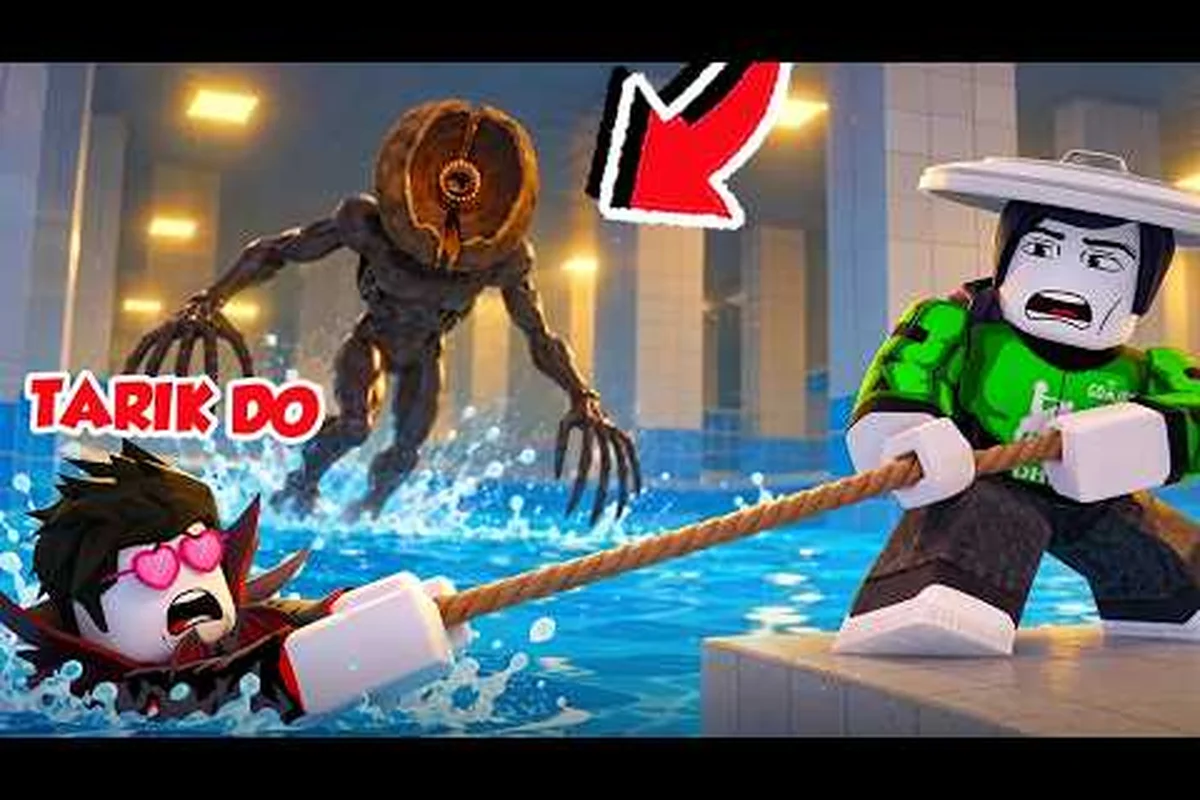
Knowing what counts as a splash in DONT SPLASH can prevent IT from intercepting your route. The key distinction is simple: water contact creates a detectable splash, while a quiet landing does not. In practice, check the monster’s position as you approach the water: jumping beside it without entering the water will not trigger a splash, but making contact with the water during the leap can alert IT and pull it into an intercept. This matters when a monster charges you, since a clean landing gives you more time to bait the charge and reposition instead of immediately creating another threat.
What Counts as a Splash in DONT SPLASH?
DONT SPLASH revolves around a blind creature that detects disturbances in water rather than seeing players. That makes dont splash what counts as a splash a practical question: contact with a water surface usually creates the sound IT uses to locate a target, whereas moving across dry ground or landing on solid platforms can remain silent.
The distinction is not limited to jumping into a pool. Touching water at the height of a jump, clipping the edge of a basin, or falling into a stream can all produce a water-entry signal. IT can then move toward the disturbance, even when the player never fully enters the water.
| Player action | Does it alert IT? | Why |
|---|---|---|
| Walking or running on dry ground | No | Footsteps do not create a water splash |
| Landing on a solid platform | No | A dry landing is silent |
| Jumping into a pool | Yes | The body creates a clear water entry |
| Touching water while airborne | Yes | Even brief contact can make a splash |
| Landing in a stream | Yes | The landing itself creates the disturbance |
| Throwing a pebble into distant water | Yes | The pebble produces a decoy splash |
The official DONT SPLASH game page describes IT as blind and dependent on splash detection, which means visual distractions do not change its tracking behavior. A player can be perfectly still and still be found if the current position produces a splash.
Dry Contact Versus Water Contact
Dry landings are safe, provided the character does not brush the edge of a pool, stream, or other water surface. The sound of a jump on concrete, wood, metal, or stone does not function like a splash in the creature's detection loop. This makes platforming useful when the route stays away from water.
By contrast, water contact is the central danger. A character may briefly cross a shallow surface or strike the waterline during a jump, and that contact is enough for IT to investigate. The event does not require a full plunge or a prolonged swim. This is why players should assume that any water crossing is risky, even if the crossing lasts only a fraction of a second.
The Core Detection Rule
A practical way to think about the mechanic is to separate a true water-entry event from sounds that merely resemble one: stepping off a ledge, falling into a lake, or dropping a thrown object into water can create a visible or audible splash, while a character landing in shallow water without breaking the surface may not produce the same cue. This distinction matters because IT can use the resulting disturbance as a location signal and begin moving toward the affected area, even when the player never made direct contact with the creature.
-
Keep the route over solid ground.
-
Treat the waterline as an active hazard.
-
Make no contact with water while jumping.
-
Listen for IT's approach after any unavoidable disturbance.
-
Create a distant decoy if a safe escape is available.
The basic water-entry event is therefore more useful than memorizing every map surface. If the character's body, feet, or thrown object causes a visible or audible splash, IT receives a location cue. The creature does not need to see the player to charge toward the disturbed zone.
Falling Into Water and Midair Splash Events
The clearest answer to dont splash falling in water is that falling into water definitely counts. A full fall produces one of the strongest splash signals in the game, making it risky to treat a stream as a shortcut or safe escape route. IT will move toward the impact area and may arrive before the player has finished recovering.
A midair splash is more subtle. If a jump clips a puddle, pool, or narrow water channel, the character can generate a splash without landing in it. Community footage has shown that touching water during a jump is enough to trigger the creature, so a brief contact should be treated exactly like a full entry.
| Splash scenario | Detection level | Likely response | Safer choice |
|---|---|---|---|
| Falling from a height into a pool | Very high | IT charges directly toward the impact | Use a dry route or make a decoy first |
| Running into shallow water | High | IT investigates the crossing point | Stop before the edge and reroute |
| Clipping water during a jump | Medium to high | IT can intercept near the landing zone | Use shorter jumps away from the edge |
| Touching a stream bank | Medium to high | IT moves toward the contact | Maintain a dry buffer from the water |
| Pebble landing in distant water | Controlled | IT is lured toward the pebble | Throw away from your planned path |
This distinction matters because the relevant outcome is not whether the player was submerged. A midair splash can still make dont splash monster charges you happen, because IT reacts to the splash zone rather than checking whether the player remains in the water.
Full Entry Versus Edge Contact
A full entry gives IT an obvious target: the point where the body hits the surface. An edge clip gives less dramatic visual feedback, but the game still treats the water disturbance as valid. Players who focus only on large falls may therefore be caught by seemingly harmless jumps near a pool.
The safest interpretation is conservative. If any part of the character contacts water, assume the location has been revealed. The official premise and verified gameplay support this approach because IT has no visual target to correct after a false alarm; it simply heads toward the noise.
Why Midair Contact Is Unreliable
Even if a midair splash occurs far from IT, the reaction still creates uncertainty. IT may approach the splash location, patrol nearby, or intercept the player's intended route. A successful jump that leaves the player on a dry platform is not enough if the jump path crossed a water surface.
For more detail on the creature's hearing-based behavior, see the guide to the blind monster's sound-based detection. Its decision process is the reason that even a small water crossing can turn a safe route into a chase.
Checking IT's Position Before a Water Crossing
The dont splash monster position check is based on movement, sound, and timing rather than a visible monster icon. IT patrols silently underwater, so players often need to infer its location from audio cues. Headphones help because the creature's approach can be heard before it reaches the splash zone.
A reliable dont splash monster position check includes several observable details: whether IT’s approach sound is getting louder, whether the underwater silhouette is angling toward you, and whether a recent splash has pulled IT toward a different route. Because IT silently patrols underwater, the absence of a visible monster icon does not mean the area is safe. For example, if a splash occurs near the edge of a dry platform and IT immediately turns toward that impact point, the platform may already be within its intercept range; stepping back or using a pebble can preserve distance without creating another dont splash monster charge.
-
Approach sound: movement near the player suggests IT is already close.
-
Splash reaction: a sudden change in the creature's movement indicates that it registered a disturbance.
-
Direction of the charge: IT moves toward the newest splash rather than directly toward the player.
-
Time after detection: the closer the splash, the less warning a player receives.
-
Safe spacing: a dry platform is not automatically safe if it is too close to water or a likely path.
| Check | What it tells you | Action |
|---|---|---|
| No water nearby | No new splash has been created | You can plan a dry crossing |
| IT sounds distant | More time may be available | Move carefully rather than rushing |
| IT sounds nearby | A charge may cut off your route | Avoid water and create distance |
| IT moves after a splash | It has registered the source | Do not remain near the impact point |
| Water lies between you and the exit | IT may intercept on the far side | Find a dry detour or use a pebble |
Community reports indicate that experienced players use headphones to judge distance and direction before making a jump. The practical value of this audio position check is not to reveal IT directly, but to create a buffer between the moment of detection and the moment of contact.
Reading the Charge Direction
When IT reacts, it does not need a clear view of the player. It follows the direction of the detected splash, which creates a useful rule: keep your next destination away from the source of the sound. If the splash happened behind a wall or to the left, crossing water in that direction is more likely to produce an interception.
The monster chase and audio-cue overview describes how the pursuit develops once IT commits. The key is to identify that commitment early. Waiting until the creature is close removes the small timing margin that would otherwise allow a dry reroute.
When Standing Still Is the Best Check
Silence is useful when IT is close. Moving across a dry surface may be acceptable, but stopping can provide a better listening window. If IT is far away, a planned dry route is usually the safest option. If IT is nearby, remaining still avoids adding a new source of movement-based uncertainty.
The practical rule is not that every sound triggers IT. The confirmed mechanic is splash detection, so actions such as wading through water, crossing a puddle, or falling into a body of water can reveal your position even when the movement itself is brief. Sounds still help the player read the monster's behavior, but IT cannot visually see a character standing motionless. A footstep on a dry surface therefore creates a different risk from a splash: the former is primarily an audio cue, while the latter can mark a location through a water-related detection event.
Using Pebbles to Lure the Monster Away
The strongest way to create distance is to redirect IT with a controlled splash. This is the core of dont splash lure the monster: throw a pebble into a pool or stream away from the route you intend to travel, then move while IT investigates that location.
| Decoy condition | Result |
|---|---|
| Pebble lands in water away from the player | IT is drawn toward the pebble |
| Pebble lands behind the player | IT may cross toward the rear |
| Pebble lands in the intended path | The player has redirected IT into danger |
| Pebble lands on dry ground | It does not create a useful water decoy |
| Player crosses water after the decoy | The new splash can override the first one |
The timing is crucial. Throw the pebble, confirm the splash, and let IT begin moving in that direction before approaching water. If the player creates another splash too quickly, IT may receive a newer location and change course. This is why decoy spacing matters more than throwing repeatedly.
Choosing a Safe Decoy Location
A useful decoy should be far from the planned path but still reachable by a thrown pebble. Players should avoid tossing into the water directly ahead, because that can send IT into the same area the player intended to cross. Behind or to the side is often better, provided the landing point is clearly audible and the throw does not require crossing water.
The monster chase guide expands on patrol behavior and safe distance management. For this mechanic, the key lesson is simple: a pebble is useful because it creates the same category of water signal that attracts IT, but without exposing the player's body.
Timing a Lure Around a Jump
A reliable sequence is: first identify a dry route, then lure the monster with a pebble thrown into distant water. The throw only counts as a lure if the pebble produces a visible splash and the monster’s position check shifts toward that splash. If IT remains aligned with the player’s route, the decoy has failed; if IT commits to the decoy, the player can move safely. This makes the pebble a timed distraction rather than a random distraction, reducing the risk of a dont splash monster intercept while IT is moving toward the lure instead of the player.
-
Identify the nearest dry route.
-
Check whether IT is moving toward the player.
-
Aim the pebble into distant water.
-
Wait for the pebble splash.
-
Move only after IT commits to the decoy.
-
Cross water only if necessary, then create a second decoy.
-
Stop on dry ground and verify that the creature has moved away.
The timing matters because the pebble’s splash is useful only when IT’s position check changes toward it; a splash that merely lands in the water does not qualify as a successful lure if the dont splash monster intercept still follows the player’s path. For example, if the creature turns toward the pebble but then tracks back toward the dry route, delay the crossing until the dont splash monster position check clearly favors the decoy. This turns the attraction into a repeatable plan and prevents a dont splash monster charge from catching the player mid-jump.
When a Lure Is Not Enough
A lure can fail if the player does not hear the pebble land, if the object lands on dry ground, or if a new splash occurs before IT reacts. It can also fail when the decoy area is too close to the player's next landing point. When those risks apply, the better answer is a fully dry route.
IT cannot be killed according to the documented gameplay loop, so a decoy must buy time rather than eliminate the threat. If there is no safe water to toss into, prioritize distance and patience instead of improvising a risky throw.
Practical Splash-Safe Routing Rules
A reliable survival plan combines dry-first routing, one-splash discipline, and decoy timing. Avoid water when the stage provides an alternate path. When water is unavoidable, know exactly where the contact will occur and plan the landing before jumping. If IT is close, a pebble can redirect it, but only if the new splash occurs away from your destination.
| Route choice | Splash risk | Monster risk | Recommendation |
|---|---|---|---|
| Solid platforms only | None | Low to moderate | Best default route |
| Short jump across a narrow stream | High | High | Use only with a clear decoy |
| Dry jump beside a pool | Low if no clipping | Moderate | Keep extra distance from the edge |
| Pebble lure, then dry detour | Controlled | Low | Preferred when IT patrols the direct path |
| Repeated water crossings | High | Very high | Avoid unless no alternate route exists |
| Standing still on dry ground | None | Depends on IT's patrol | Useful for listening |
One-Splash Discipline
One-splash discipline means allowing only one deliberate water event during a dangerous sequence. If a pebble creates the first splash, avoid stepping into water until IT has moved. This reduces the chance that the creature receives two conflicting locations and reacts to the newer one.
It also improves route planning. Instead of entering a pool, making another jump, and hoping the creature stays distracted, choose a path that reaches dry ground after one disturbance. The less often the location changes, the more predictable IT's movement becomes.
Using Height and Distance
Height can provide safety only when the entire path remains dry. A high jump over a pool is safer than a low jump through one, because the character does not touch the water. It can still be dangerous if IT is already near the far landing and the landing point limits your escape options.
Distance is equally important. The farther the splash occurs from the player, the longer IT may take to arrive, but the decoy and the player should not cross paths. A pebble thrown into the same pool you need to cross creates a weak lure; one thrown across the stage creates a meaningful diversion.
When to Accept a Splash
Sometimes the stage leaves no dry route. In that case, accept the splash intentionally rather than producing it accidentally. Choose a landing point with several dry exits, wait for a favorable patrol position, and create a second decoy if IT starts closing the distance.
A planned splash is less dangerous than an accidental one because you can anticipate its location, read the water surface, and choose the next landing. The key distinction is not whether the player avoids water entirely, but whether the disturbance has a useful purpose: a mid-air splash that lands beside a patrol route, for example, can expose an IT intercept angle or buy a second decoy time. If the splash leaves you stranded in deep water, near IT’s position, or without a visible exit, it is not a controlled distraction; it is merely a lost position caused by accidental movement.
Frequently Asked Questions
Does jumping into water count as a splash in DONT SPLASH?
Yes. A jump into a pool, stream, or other water surface creates a clear splash event, and IT can respond by moving toward the impact point. The creature does not need to see the player because it relies on detecting the disturbance rather than tracking a visible target.
Can touching water during a jump still alert IT?
Yes. Even a brief midair contact with water can count as a splash. Community gameplay confirms that clipping a pool or stream while airborne may trigger a charge, so players should treat the waterline as hazardous even when they do not fully enter the water.
Does landing on a dry platform make a splash?
No. A normal landing on solid ground should remain quiet, although contact with a wet edge or a nearby water surface can still create a disturbance. Keep clear of puddles and inspect the sides of platforms before committing to a jump.
How can I lure IT away from my route?
Throw a pebble into water far from your intended path, then wait for the pebble splash and for IT to move toward it. This works best when the decoy is distant, clearly audible, and does not require you to cross additional water before IT commits.
How do I check IT's position before jumping?
Listen for its approach and movement before crossing water. Because IT is blind, nearby audio can warn you that a charge is likely to intercept the route. A position check should also account for the location of nearby water and your next dry landing point.