
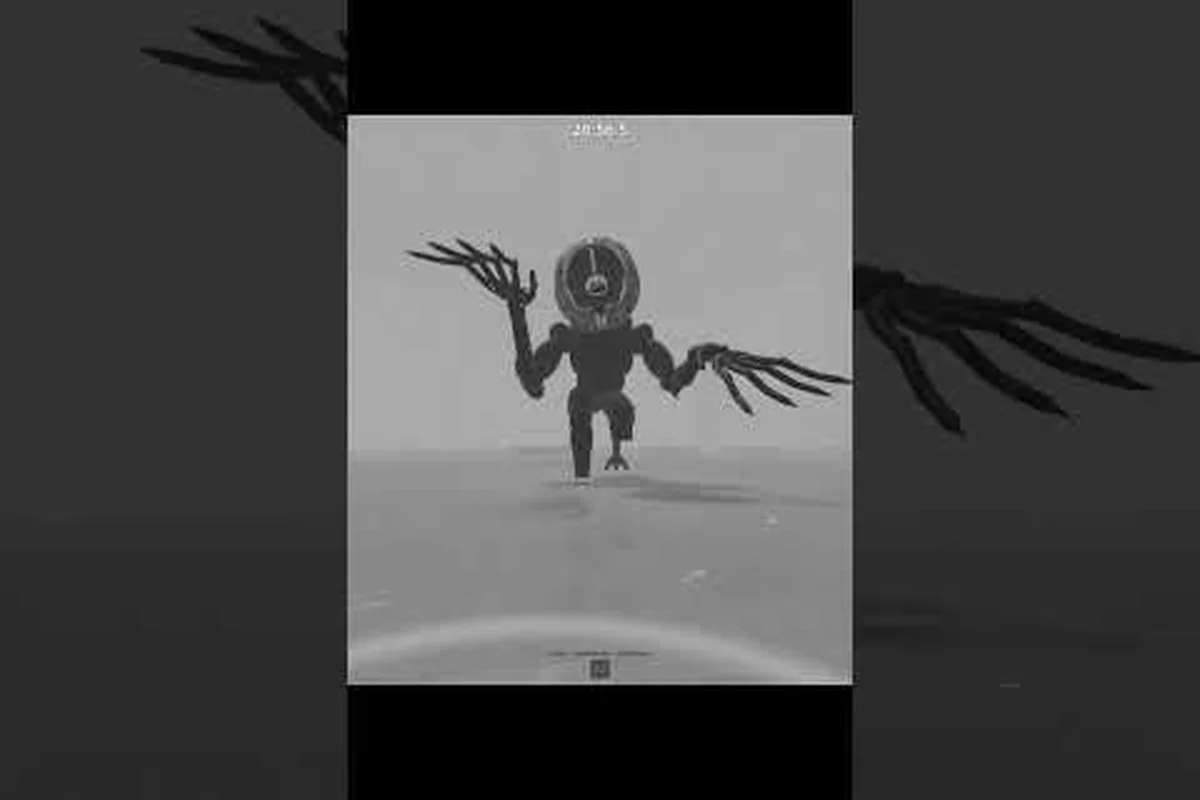
IT cannot see your avatar, so the dont splash monster line of sight question has a simple answer: vision is irrelevant. The creature reacts to water sounds, making silence, dry routes, and pebble lures your best defenses.
Dont Splash Sound and Sight Detection Rules
The central rule behind the dont splash monster line of sight is that IT does not rely on sight. According to the official DONT SPLASH game page, the creature is blind and navigates by detecting splashes. That changes every pursuit decision: hiding behind an object offers little value if your feet break the surface, but moving across a completely dry platform can leave IT unaware of your position.
The useful distinction is between a visual encounter and a sound-triggered investigation. IT may be moving near you because it heard a splash earlier, not because it saw you enter the area. Once it reaches the splash point, it begins searching and may patrol nearby. A new sound creates a stronger target, so repeated mistakes can pull it back toward the same route.
| Player action | Likely IT response | Practical result |
|---|---|---|
| Walk on a dry surface | No splash-based alert | Usually the safest movement option |
| Enter water normally | Immediate splash detection | IT charges toward the splash zone |
| Touch water while jumping | Splash during the jump | IT can intercept you mid-air |
| Drop a pebble into distant water | Decoy sound at the pebble’s location | IT moves toward the lure |
| Hide in view of IT | No visual detection advantage | Proximity remains dangerous if water makes noise |
This is the foundation of the dont splash entity behavior roblox: IT is not tracking a visible model, and there is no ordinary cone-shaped sight check. Its awareness is tied to audible events in the water. A clean route matters more than breaking its line of sight.
Why Water Contact Creates an Instant Alert
Water contact creates a sound event strong enough for IT to investigate, so the issue is not simply whether the monster “looks” toward your position. It is whether a splash identifies a location it should inspect. Falling in, clipping the water while jumping, or allowing an object to land in a pool can all create that location.
Community gameplay reports show the same basic pattern: IT patrols underwater, turns toward a splash, and charges toward the affected area. The reaction can be quick enough to catch a player who thought the jump was safe. A verified DONT SPLASH walkthrough by Zac Worthy demonstrates how the creature commits to a splash zone rather than following the player’s visible movement.
Sight, Distance, and the Charge Target
Line of sight has no role in the chase, but distance still affects timing. A distant splash can draw IT toward the noise, while a nearby splash gives it less time to travel before reaching your route. The danger therefore depends on three factors: sound volume, how close the sound originates, and how much space remains before you must cross another water hazard.
That distinction is vital when you are studying the dont splash catch phase. IT does not need to see a player enter a pool. It may reach the water after the player has moved onward, investigate the location, and then intercept a later crossing. Keep moving only after the creature commits to the decoy or drifts back into patrol.
Dont Splash Quiet Movement and Safe Route Planning
The dont splash stay quiet guide starts with a rule that is easy to miss: “quiet” does not always mean “walking slowly.” Sound comes from contacting water, so even a careful sprint across a dry path may be safer than a cautious step into a shallow pool. Players should identify every wet section of the route and decide whether it can be replaced with a dry path, a timed jump, or a deliberate distraction.
The DONT SPLASH beginner guide is useful for understanding the broader objective, but route planning requires a separate look at where water intersects the path. Start from the landing point of every platform and ask what happens beneath the player’s next step. If the answer is water, identify the exact contact point, because that is where IT receives a new target.
| Route condition | Risk level | Better approach |
|---|---|---|
| Wide dry walkway | Low | Cross normally and keep moving |
| Small gap over water | Medium | Jump cleanly without clipping the surface |
| Gap with only a narrow ledge | High | Reroute or create a pebble lure first |
| Water leads directly into another pool | Very high | Wait, lure IT away, then commit |
| Dry platform visible through open water | Low until contact | Stay on the dry platform |
| Pebble landing point near the player | Medium | Throw farther from your crossing route |
Classify Every Hazard Before Moving
A useful quiet-movement plan has three layers. First, mark the visible pools. Second, identify hidden water beneath translucent or visually misleading surfaces. Third, locate the platform edge where a jump could clip the surface. The third layer matters because a leap that looks successful can still produce a splash if the avatar brushes the water during the arc.
For each hazard, prepare one alternative. A dry detour is safest. A clean jump is useful when the landing is stable. A pebble lure is best when the next section has no dry substitute. This habit turns dont splash quiet movement from a vague instruction into a repeatable process, especially on levels where water occupies most of the visible floor.
Pebble Lures and Route Separation
Throwing a pebble into a distant pool creates a false splash target. Player footage of the no-commentary stage run shows the lure pulling IT away from the intended path. Its effectiveness depends on separation: the pebble should draw IT across the map, not merely to the opposite side of a single platform.
| Lure placement | Expected result | Caution |
|---|---|---|
| Farther down the next route | IT moves away from your current crossing | Throw while standing on dry ground |
| Directly beside your path | IT investigates a nearby point | It may return quickly |
| Behind the player | Creates a temporary rear diversion | Do not linger in the water |
| In the same pool as the player | Offers little route separation | Avoid unless it creates a clean exit |
| Across a wide gap | Strongest distraction | Keep the intended route in sight |
Use the lure as a planned diversion, not a panic button. Throw it only when you can see dry ground for your own retreat. If the pebble lands close enough that IT returns to your position before you cross, the tactic has merely delayed the encounter.
Dont Splash Stay Quiet Guide for Avoiding Mid-Jump Contact
The most common surprise is not falling into a pool; it is touching the water during a jump. A jump that clears the visible edge can still clip the surface, and verified player footage confirms that IT can respond during that airborne moment. Players should therefore judge jumps by the waterline clearance, not by whether the avatar remains above the platform for most of the arc.
Read the Waterline Before Committing
Look at the exact edge of the pool and allow a small margin for uncertainty. A jump that barely clears the water may be technically successful yet still create a splash, especially when character movement is slightly off. Longer jumps, safer landings, and direct routes are preferable to tight corrections near the surface.
The dont splash stay quiet guide also depends on avoiding a second splash after the first. If IT is already moving toward a failed jump, entering the same water again keeps the target close. Land on dry ground, stop only long enough to identify IT’s direction, and move toward a separate route. The DONT SPLASH obby guide can help with platform spacing, while this guide focuses on what happens at the waterline.
| Jump outcome | What IT detects | Best correction |
|---|---|---|
| Clean clearance with dry landing | No water sound | Continue and preserve distance |
| Surface clip | A sharp splash event | Move away immediately |
| Full fall | Sustained splash | Reach dry ground without delaying |
| Water contact on both sides of a gap | Two closely placed sound events | Do not remain between the pools |
| Dry landing after a close call | One noise event only | Verify IT’s direction before crossing again |
Why Slow Feet Do Not Solve Every Problem
Walking slowly is not the same as moving quietly in this game. A slow step into water still creates a splash, while a controlled run over dry ground may be safer because it reduces the time IT has to react to a new noise elsewhere. The objective is not to minimize every visible movement; it is to minimize the number of water-contact events.
Players who use the dont splash catch phase as a mental model often pause after a jump. That pause is useful only when it reveals where IT is moving. If IT has already turned toward the sound, remain on dry ground and create distance. If it is still patrolling elsewhere, complete the crossing before it can circle back.
Dont Splash Monster Survival Tips for Tracking IT
The most useful survival signal is audio. Community tips emphasize headphones because IT’s movement and reaction cues help players estimate whether it has committed to a chase, returned to patrol, or begun searching near a failed jump. Visual checks are secondary because the monster does not use sight to find you.
A verified collection of DONT SPLASH tips by TonyCool illustrates how experienced players use sound to judge distance. The important lesson is not to treat every noise as a chase trigger. IT may patrol continuously, investigate a splash, or remain attracted to a decoy. Your response should match the current behavior.
| Heard or observed cue | Likely interpretation | Survival action |
|---|---|---|
| Distant splash reaction | IT received a new sound target | Pause on dry ground and identify the direction |
| Sudden water movement nearby | IT has entered your current area | Move toward a separate dry route |
| Water disturbance continues far away | A lure or earlier splash is holding IT | Use the opening to cross |
| Splashing stops nearby | IT may be searching at the noise point | Avoid nearby water and stay quiet |
| Chasing footsteps or water rush | IT is pursuing the current target | Break the sound chain, if possible |
| No reaction after a dry movement | Your route did not create a splash | Continue while monitoring the audio |
Maintain a Dry Escape Route
After every risky crossing, identify a dry landing that lets you retreat without touching water. A successful jump with no dry landing ahead is only a temporary escape because IT may close the gap. Good routes end near another platform, not in the middle of a pool.
The best dont splash monster survival tips combine three choices: remove unnecessary water noise, create separation with a pebble, and listen for behavioral changes. If IT is investigating a distant pool, move now. If IT is already near your route, use another lure or select a completely different branch. The DONT SPLASH winning strategy offers broader objective and routing advice, while sound awareness remains the key monster-specific skill.
Understand the Catch Phase
The catch phase begins when IT commits to a relevant sound target and closes in. During that phase, the player loses the advantage of a stationary position because IT is directed toward a specific area. A second splash in the same region can refresh or redirect that attention, so avoid panicked movement through water.
The crucial distinction is between investigation and capture. During investigation, IT travels to the sound and searches around it. During capture, it reaches the player and the run ends with a jumpscare, as shown in this DONT SPLASH gameplay clip. You cannot attack IT, so prevention is the only reliable defense.
Dont Splash Entity Behavior Roblox: Pattern Recognition
Understanding the dont splash entity behavior roblox helps players react faster because every cue is caused by a limited set of events. IT patrols, detects a splash, approaches the source, searches locally, and then resumes movement. The official game page confirms that sound is the central trigger, while community footage supports the movement sequence described in stages.
This pattern also explains why a successful distraction can save a run. The pebble produces a valid sound event, but at a controlled location. IT responds to that event because the creature cannot distinguish a player splash from a thrown object. Once the lure draws the creature away, the player can cross a hazard that would otherwise have exposed their position.
| Event | IT’s likely state | What it is doing | Player response |
|---|---|---|---|
| Normal underwater patrol | Searching | Moving through the level | Proceed quietly on dry ground |
| Pebble splash | Investigating | Traveling toward the decoy | Cross another route |
| Player splash | Locked to a target | Charging toward that splash | Reach dry ground and leave |
| Near the splash point | Searching | Checking the surrounding area | Hold still on dry ground |
| No new noise for a while | Returning or patrolling | Losing the immediate target | Test another route carefully |
| Catch | Capture | Reaching the player | Run ends |
Learn the Sounds Instead of Watching Constantly
Watching IT can distract you from the surface beneath your character. Audio gives you information without requiring your camera to face the monster. Listen for movement in the water, a sudden change in direction after a splash, or a chase that grows louder. These cues help you decide whether to continue, wait, or throw a pebble.
This is especially useful because the dont splash monster line of sight has no visual component. The relevant “sight” question is not whether IT can see you, but whether your current sound has created a target at your exact location. A player can be visible and safe if standing on dry ground, or invisible behind scenery and still exposed after a splash.
Practical Checklist for a Quiet Run
Before a difficult section, use this compact sequence:
| Order | Check | Action |
|---|---|---|
| 1 | Water ahead | Mark every pool and submerged edge |
| 2 | Dry alternatives | Choose a detour before committing |
| 3 | Jump clearance | Leave a margin above the waterline |
| 4 | Landing space | Confirm dry ground after the jump |
| 5 | Lure position | Select a distant target, not a nearby one |
| 6 | IT’s location | Use audio to identify the current patrol direction |
| 7 | Escape route | Keep a second dry path available |
| 8 | Post-crossing behavior | Move away if a splash was detected |
The dont splash stay quiet guide ultimately comes down to separating sound from movement. Fast movement is not automatically dangerous, and slow movement is not automatically safe. Water contact creates the risk, so focus on dry routes, clean jumps, and deliberate lures. For additional perspective on the game’s atmosphere and the creature’s possible origins, read the DONT SPLASH horror lore theories. Above all, remember that IT cannot kill you by seeing you; it tracks noisy splashes, so a quiet route is the strongest defense.
Frequently Asked Questions
Can IT see your avatar in DONT SPLASH?
No. IT is blind, so the dont splash monster line of sight does not determine whether it detects you. It reacts to sounds such as splashes, falls, and objects entering water. Standing on a dry surface can keep you unnoticed even when IT is nearby, although a loud splash will still reveal your exact location.
Does jumping through water alert IT?
Yes. Touching the water during a jump creates a splash event, even if the player avoids falling in completely. Verified gameplay demonstrates that IT can charge toward the contact point and intercept the player. Leave extra clearance above the waterline, land on dry ground, and move away immediately after any accidental contact.
What is the safest way to pass a large pool?
Choose a dry detour whenever possible, because a long detour is more reliable than a close jump. If the pool blocks the only route, throw a pebble into a distant section of water and wait for IT to commit to the decoy. Cross only after confirming that the creature has moved away and that your landing point is dry.
Does a pebble lure work near the player?
It can, but the diversion is weaker because IT may return quickly. A pebble is most useful when it creates substantial distance from your intended crossing and gives you time to move. If the lure lands in the same pool you need to cross, it may not redirect IT enough; choose another target or find a dry alternative.
How can players tell if IT is chasing them?
Listen for water movement that grows louder or rapidly approaches your position, especially after a splash. IT does not need to see you to chase a sound, so the sound of its movement is more useful than trying to maintain visual contact. If the noise is distant, continue your route; if it is nearby, reach dry ground and create separation.